

The IB Diploma Vs HSC
As we welcome our first IB Diploma cohort to Westbourne College Sydney in January, we take a moment to reflect upon the differences between the two primary Senior Secondary options available in Australia.
As you approach your Senior Secondary years you will begin to see a variety of educational options unfold in front of you. In New South Wales, one of the first options that you might be presented with is the choice between HSC and the IB Diploma. This is not an insignificant fork in your educational road, as it can shape your future in higher education. We thought we would give you a bit of background by way of a compare-and-contrast analysis for both options to help you better make this important decision.
The history of the IB Diploma in Australia
The International Baccalaureate Diploma (IBDP) offers a global curriculum, specifically designed for students aged 16 – 19 years, or in their final two years of secondary education.
Developed in Switzerland in the mid-1960s by a leading group of international educators, the IBDP curriculum is free of government influence and offers an academically rigorous common curriculum and examination system designed to facilitate university access world-wide. Students studying the IBDP at Westbourne have a long term track record of achieving 90% Russell Group* university entry (the top 24 universities in the UK, including Oxford, Cambridge, Imperial etc.).
Whilst the IBDP is still growing in popularity within NSW, the programme is widely taught globally, with nearly 3,500 schools in 157 countries currently teaching the IB Diploma (IBO).
First offered in Australia in the late 1970’s, it is in the past two decades that we have seen Diploma student numbers swell across Australia, with currently 77 schools now offering the IB Diploma Programme. Westbourne College is the first school in NSW to offer the IB Diploma only, such is the strength of our belief in the exceptional breadth and depth of education the curriculum provides.
Exploring the curriculum
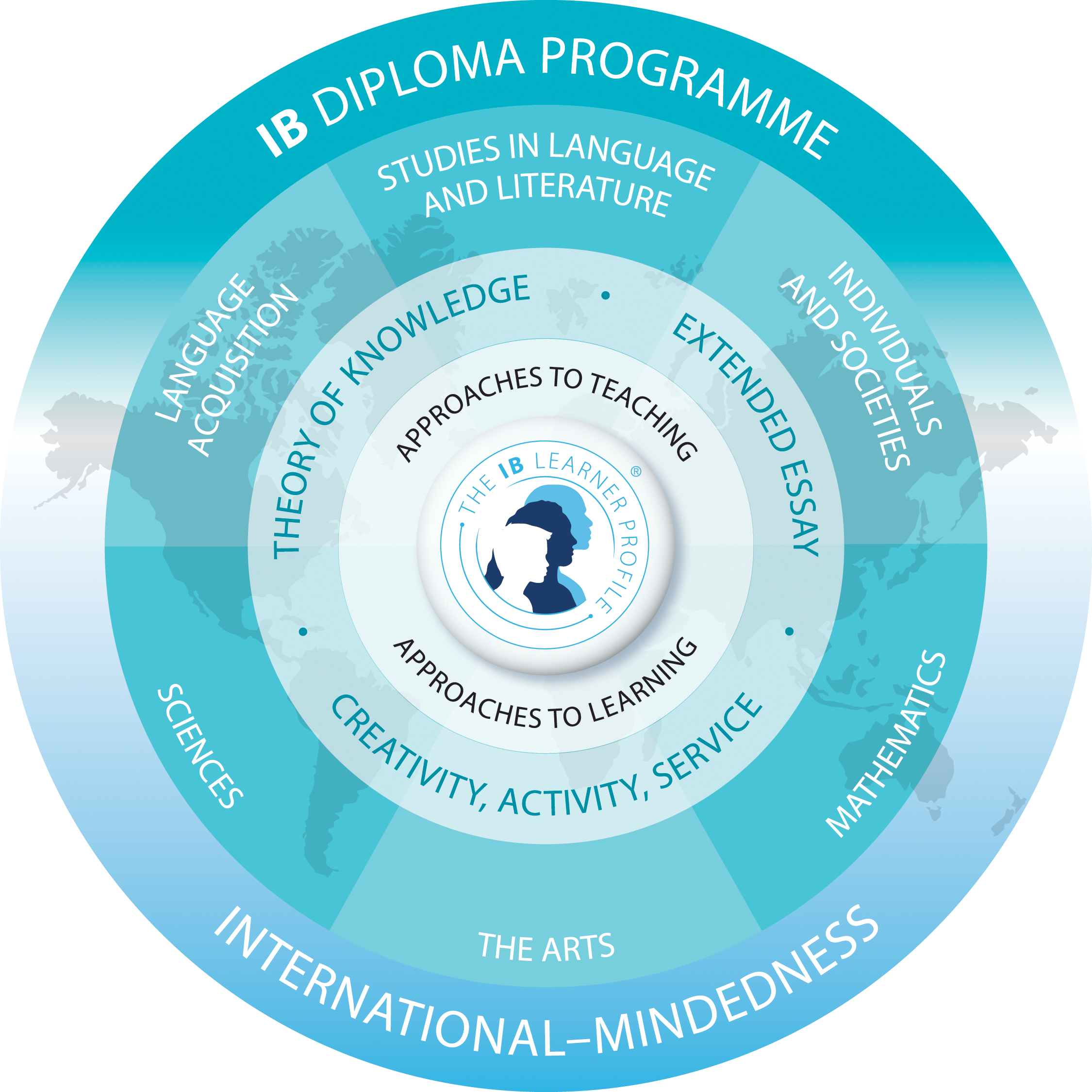
Throughout the IB Diploma student study six subjects over two years, alongside an ‘inner core’ designed to develop leadership, critical thinking and research skills.
Students select one subject from each of the six subject groupings and includes language acquisition and mathematics.
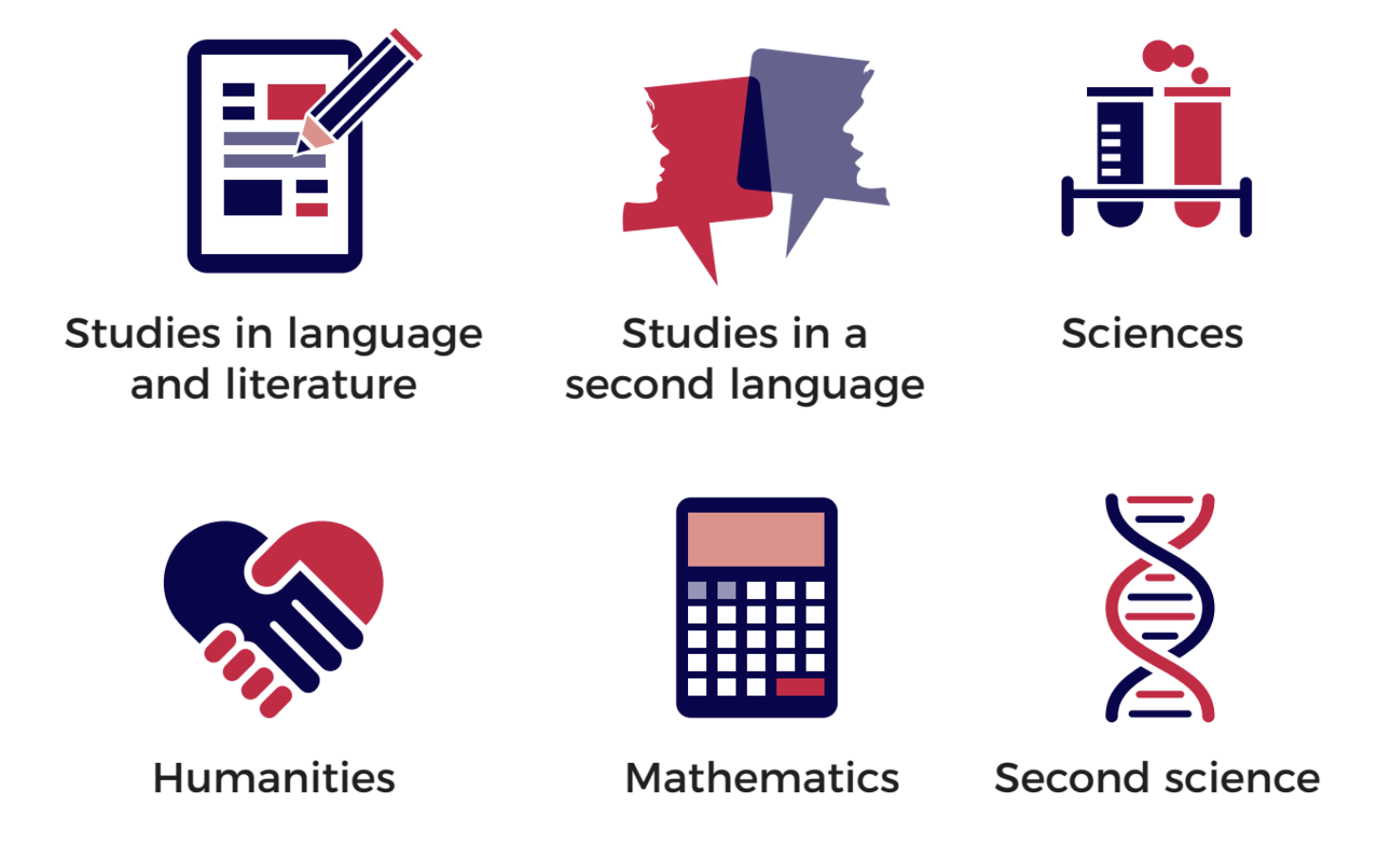
Group 6, often known as ‘The Arts’ has the option for students to study a second humanity subject, or a second science. Students at Westbourne College Sydney, as a proudly STEM focused IB College will be selecting a second science.
Westbourne students with a particular interest in the arts will be able to pursue that passion through the CAS ‘core’ element of the IB Diploma.
The IB Diploma is designed to develop a complete breadth and depth of education within students. Students therefore, select 3 subjects which will be explored fully at Higher Level and 3 subjects in support which are studied at Standard Level (SL). Each subject is assessed both internally and externally, with internal assessments made up of a range of presentations, essays and assignments. External assessments take place at the end of the course, in Australia this results in a November exam, in our UK School, exams are held in May (with the start of the academic year being in September).
The inner core
As well as the subject selection, IBDP students all study three inner core requirements.
In addition to the six subject groups, a student must also complete three core requirements to receive an IB Diploma. These components include an Extended Essay, Theory of Knowledge, and Creativity, Activity, Service participation requirements. These core elements interact to create a truly holistic and rewarding experience which many students find rewarding and enhancing their motivation and skills development.
CAS
The CAS element involves Creativity, Activity (recreation) and Service (community involvement), with students completing approximately 50 hours of CAS engagement throughout the course.
Theory of Knowledge
A key part of the development of critical thinking skills, the TOK element of the Diploma sees students conducting a study of the theory of knowledge, its methods, validity and scope, particularly the distinction between justified beliefs and opinion. Students are graded through a 1500 word essay and oral presentation on the nature of knowledge and knowledge acquisition.
Extended Essay
A 4000 word self guided research essay on a subject of the students choice, the Extended Essay is an excellent way for students to demonstrate their academic intent to university admissions tutors.
Grading
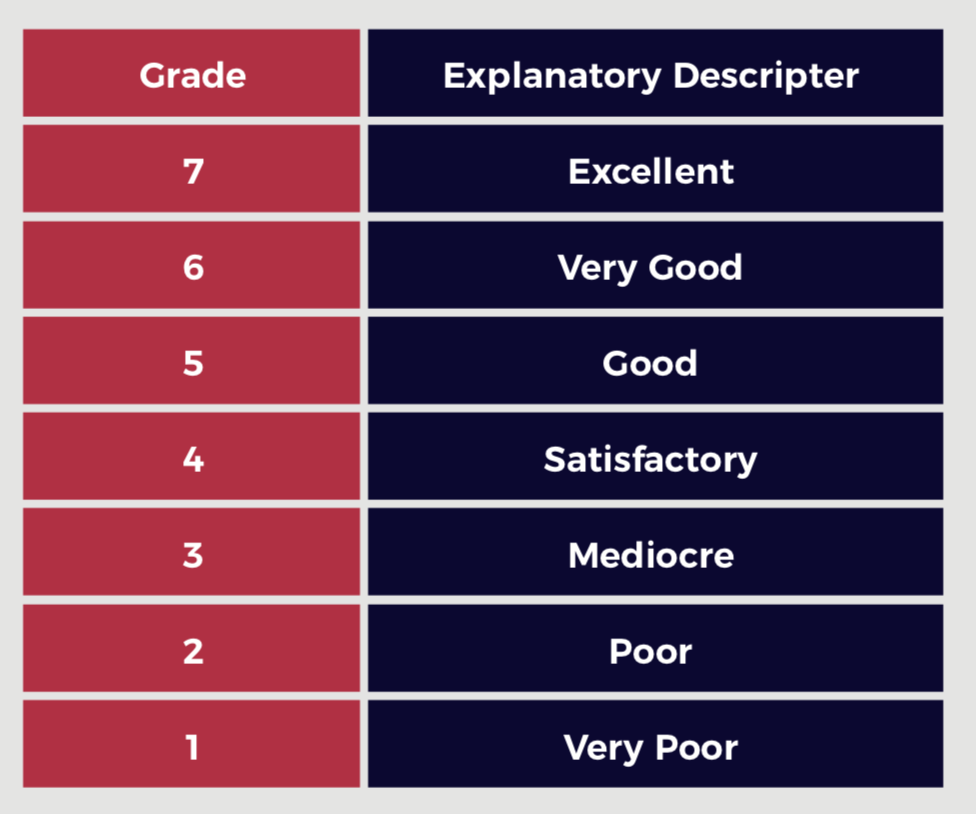
IB Diploma students receive an overall point score out of 45. This is comprised of each subject being graded out of 7 (maximum 42 points), plus the TOK and EE element offering up to an additional 3 points.
Learner Profile
The Learner Profile brings together all IB programmes, embodying the IB’s Mission Statement with an emphasis on engagement, ethical awareness and creating proactive and informed students.
The IB’s aim is to ensure that by the end of their studies learners are: inquirers, knowledgeable, thinkers, communicators, principled, open-minded, caring, risk-takers, balanced and reflective (IBO).
As a result, IB students are equipped with a variety of vital skills that will help them excel both academically and in life too.
Strengths of HSC Vs IBDP
The HSC represents a time-honored educational achievement that is recognized across Australia, in use for nearly 60 years with a comprehensive curriculum that enables students to easily move forward in their education anywhere in Australia.
The IB Diploma, on the other hand, has become very popular with not only students looking for an academically rigorous option, but students wishing to pursue their education beyond the borders of Australia. We examine below some of the crucial strengths of the IB Diploma Program, supported by scholarly research.
The practical benefit of the IB Diploma is the versatility allowed to any Year 12 graduate receiving the IB diploma as a stepping stone to a university education. The IB Diploma is recognized as the gold-standard of education, and by design, it offers an easier entrance to any number of universities around the world than would be afforded with a traditional HSC diploma.
Research conducted in a variety of countries and contexts has strongly demonstrated that IBDP students enrol in top tier institutions and have stronger academic performance once they embark on their tertiary studies (IB Asia Pacific).
Additionally, research by Cole at al. (2015) demonstrated that DP graduates had statistically significantly higher mean scores across three predictors of postsecondary school success which include reported ATAR scores, academic self-concept and perceived university outcomes (10).
The unique design of the Diploma Program contributes to enhancing students’ university preparedness. According to the research conducted by Lee at al. (2017), IBDP alumni highlight Creativity, Action, Service, Extended Essay, and Theory of Knowledge courses as “opportunities to develop communication, creativity, critical thinking, global-mindedness, cultural sensitivity, and leadership” which are skills connected to enhanced performance at university (2).
The pedagogic strength of the IB Diploma comes from its modern, interdisciplinary approach to education. It encourages critical thinking, independent research skills, and it fosters a sense of global-mindedness that is essential not only for students looking to study abroad, but for any young person growing up in our modern society.
A combined study by University of Canberra, University of Hong Kong and University of Virginia explored the post-secondary experiences and outcomes of DP alumni at three leading universities in the Asia-Pacific region. Within the findings, DP alumni reported higher capacities for a variety of 21st century skills compared to their non-DP counterparts. DP graduates indicated higher ratings for their capacity in areas of cultural sensitivity, global-mindedness and critical thinking (Lee at al, 2017, 3).
Investigating critical thinking skills among DP students in Australia, research findings have pointed to an evident impact of the DP Program on students’ university readiness as well as perceptions of their own academic abilities and future university success, with a link shown between the Diploma Program’s focus on critical thinking and students’ increased habits of critical thinking (Cole at al, 2015, 10).
ATAR Conversions
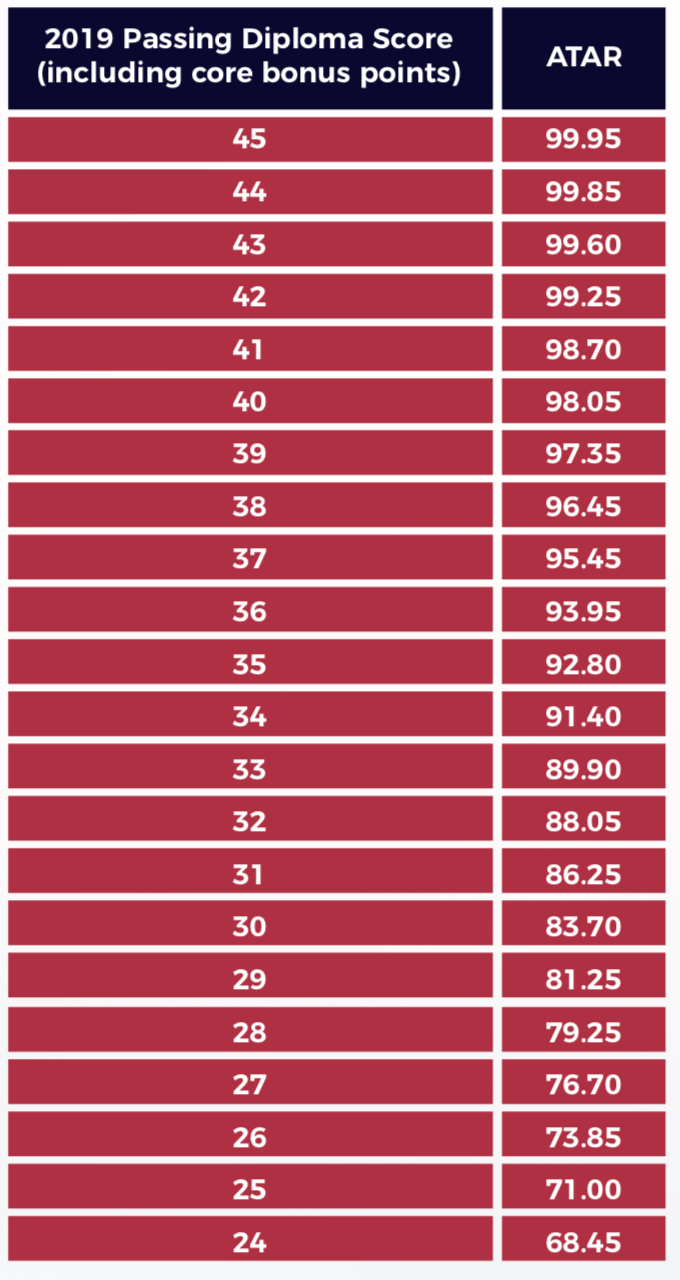
There has been a slight modification of the IB/ATAR conversion system in recent years, but the net results are still the same; students who perform well in IB programs generally rank extremely high in their ATAR scores.
The high performance is connected with the workload demands of the IB Diploma. In order to manage the demanding schedule of an IBDP a student needs to develop effective study habits and educational practices that pay dividends throughout the program.
It should also be noted that once you have made those study skills a regular part of your academic routine, IB students are already well-suited for the demands of the university system.
Global recognition
The IB Diploma is globally recognised and enables students, through its academic rigour, to showcase the full breadth of their ability.
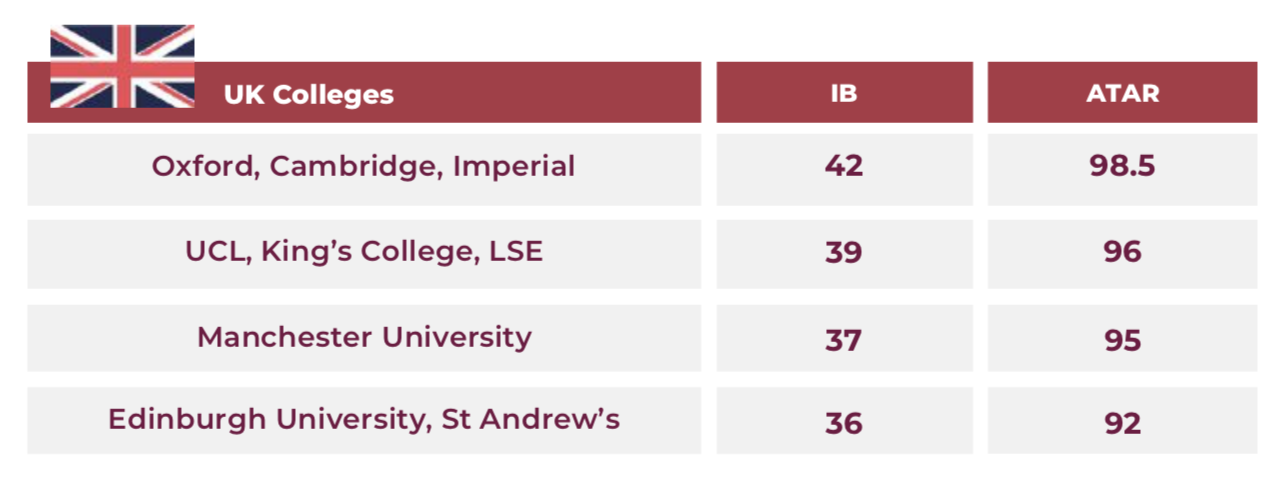
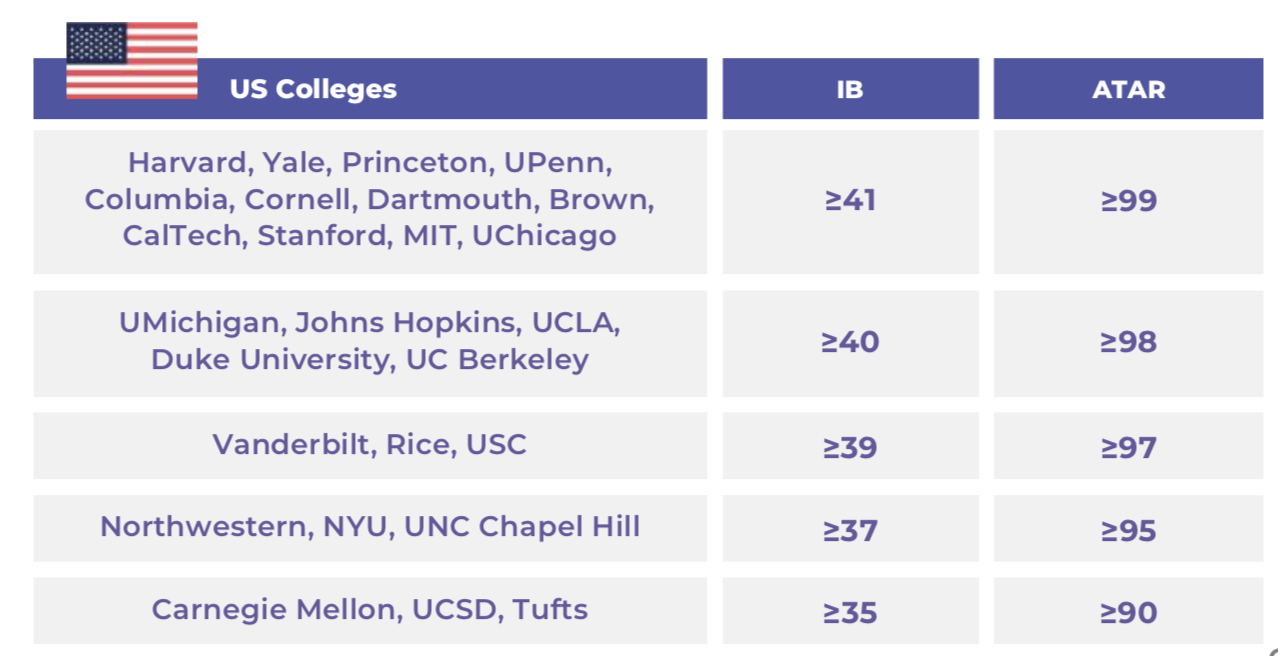
The below charts (reproduced with thanks to Crimson Education) highlight the typical scores expected of top US and UK universities.
Please note that offers vary, subject to course competitiveness, US applications require an SAT score in addition. Crimson’s illustration is meant as a guide only.
The IB point ATAR conversion for 2020 can also be found via the IB Australasia site.
Future Ready Education
For the motivated STEM focused student with strong ambition for their secondary school education, Westbourne’s International Baccalaureate program opens doors world-wide.
Located in the CBD in Sydney, Westbourne College is the first international expansion of Westbourne School, the UK’s IB School of the Year 2019 and sector first in the UK for five consecutive years.
A STEM-focused curriculum engineered to foster success in those motivated to look towards Ivy League and prestigious higher-learning institutions both within Australia and abroad.
The campus environment at Westbourne College Sydney is focused on your future with a business-attire dress code and a co-ed student body. Our goal is to prepare you for the next step in your career, and everything we do at Westbourne is designed to create a space that is fixed on that goal.
The choices you are going to make in the upcoming years are going to shape your future. If you want to prepare yourself to succeed in a contemporary global society, Westbourne College Sydney will help you develop the skills that will set you up for success.
Discover More About Westbourne College